Taipei American School · 2023
Motorized Go-Kart
Project Overview
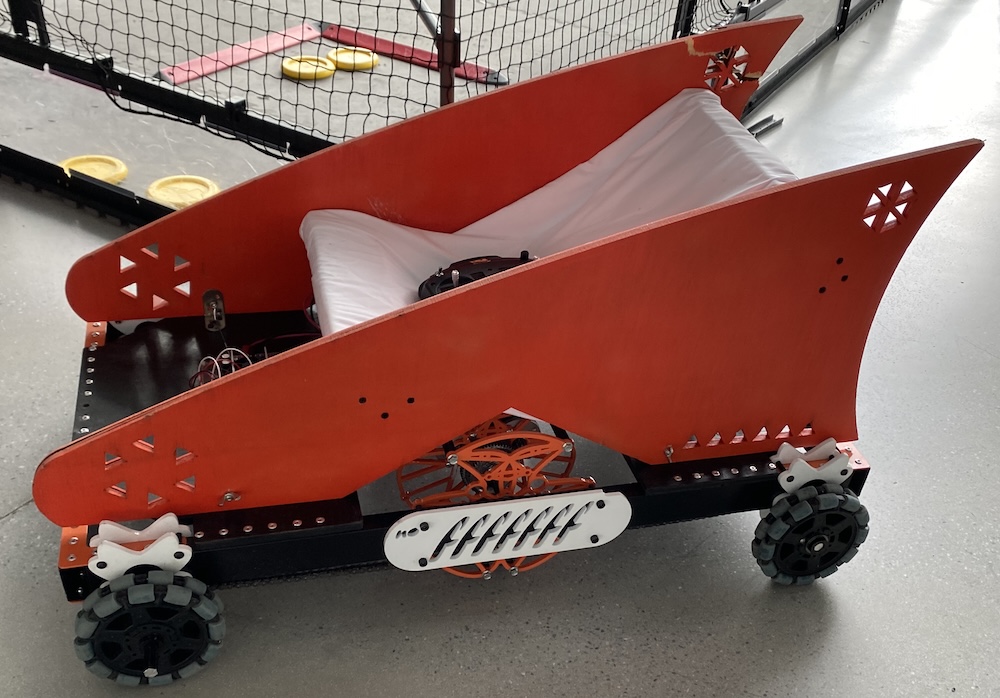
The motorized go-kart was developed as part of the Mechanical Engineering course at Taipei American School. The objective was to create a go-kart from scratch. We designed it in CAD, cut the frame on the CNC waterjet, and wired the motors ourselves, then raced it in time trials.
Design Process
The development process followed a rapid prototyping approach, as there was limited time to build a complex system. When designing, weight was most carefully considered, as at the power of the motors we used, the power to weight ratios would be the greatest differentiators in performance. We were also provided with an example kart to base our designs on. A basic rectangular frame was designed first, then the sides and gearbox. The designs were deliberately kept simpler to allow for greater room for error when manufacturing and assembling the system.
- Powertrain: Two electric motors, configured to supply torque to two wheels of the same side.
- Steering: With the parallel AWD configuration, steering was tank-like, which let the kart spin in place.
- Electronics Integration: RC Receiver and Transmitter to control the car remotely or while seated.
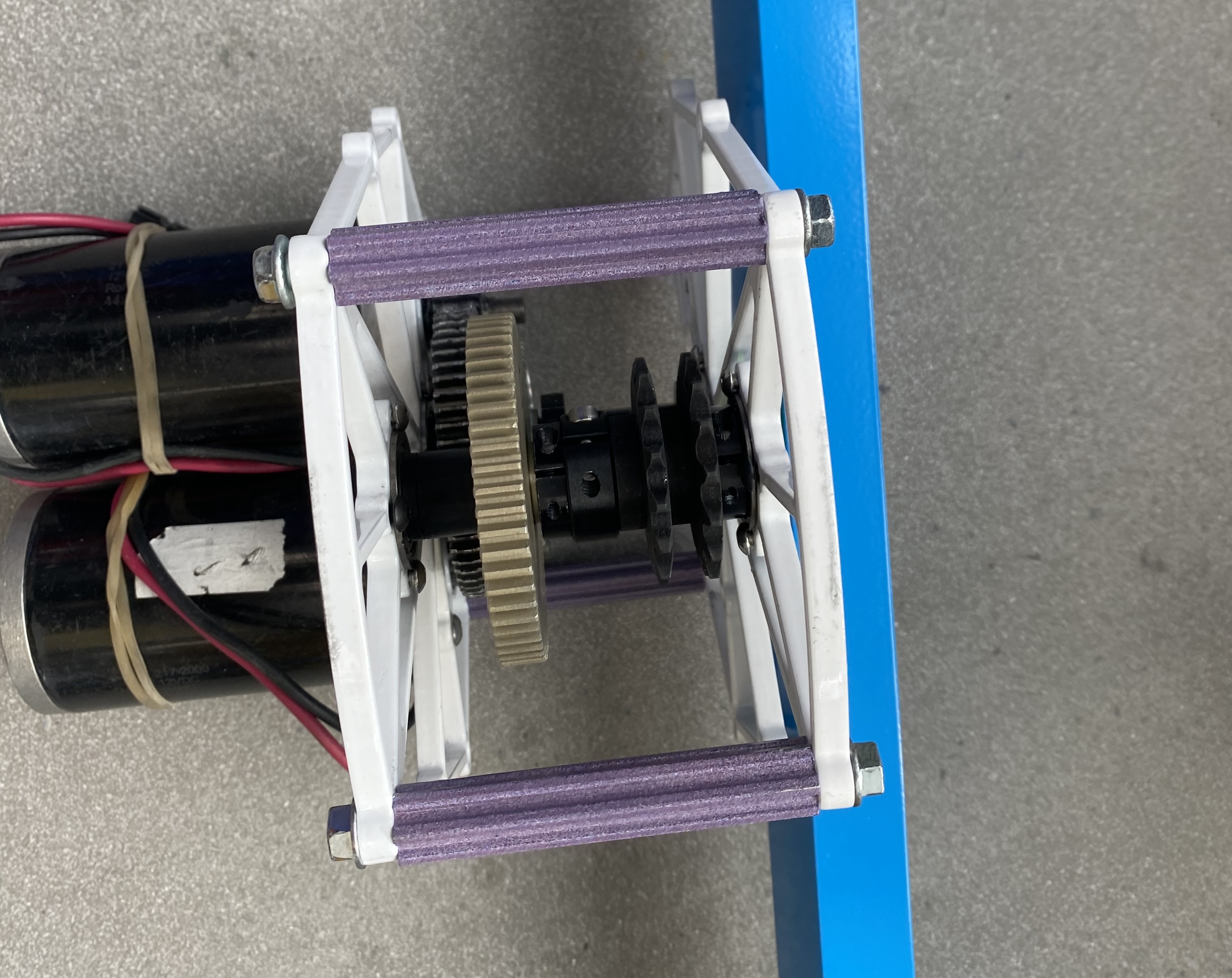
The gearbox of the example kart provided.
Manufacturing and Machining
The kart was built entirely from scratch using Taipei American School's Techcube machine shop tools. Different tools were used for different purposes.
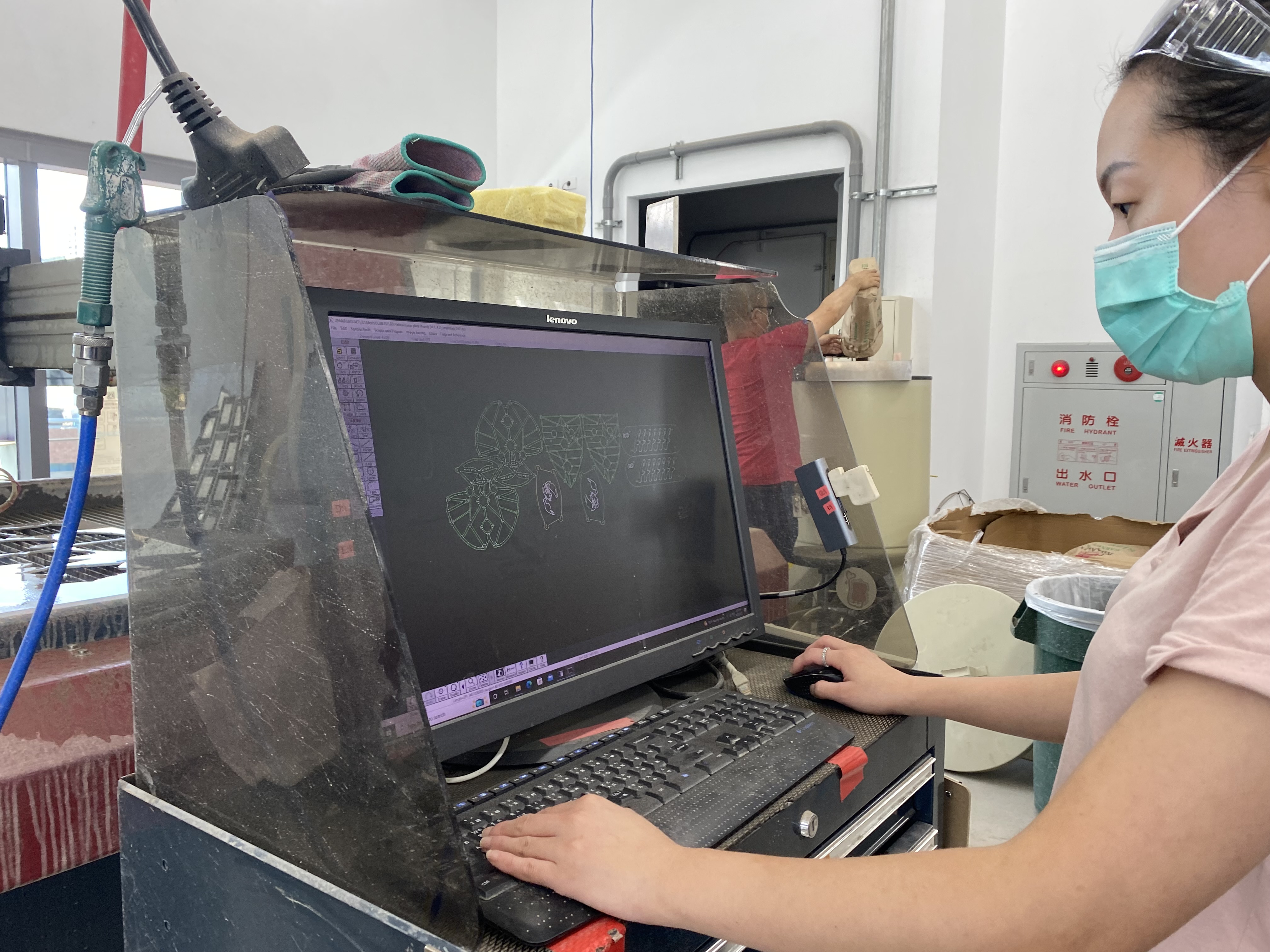
Preview of cutout of go kart component being created via waterjet CNC, out of aluminum.
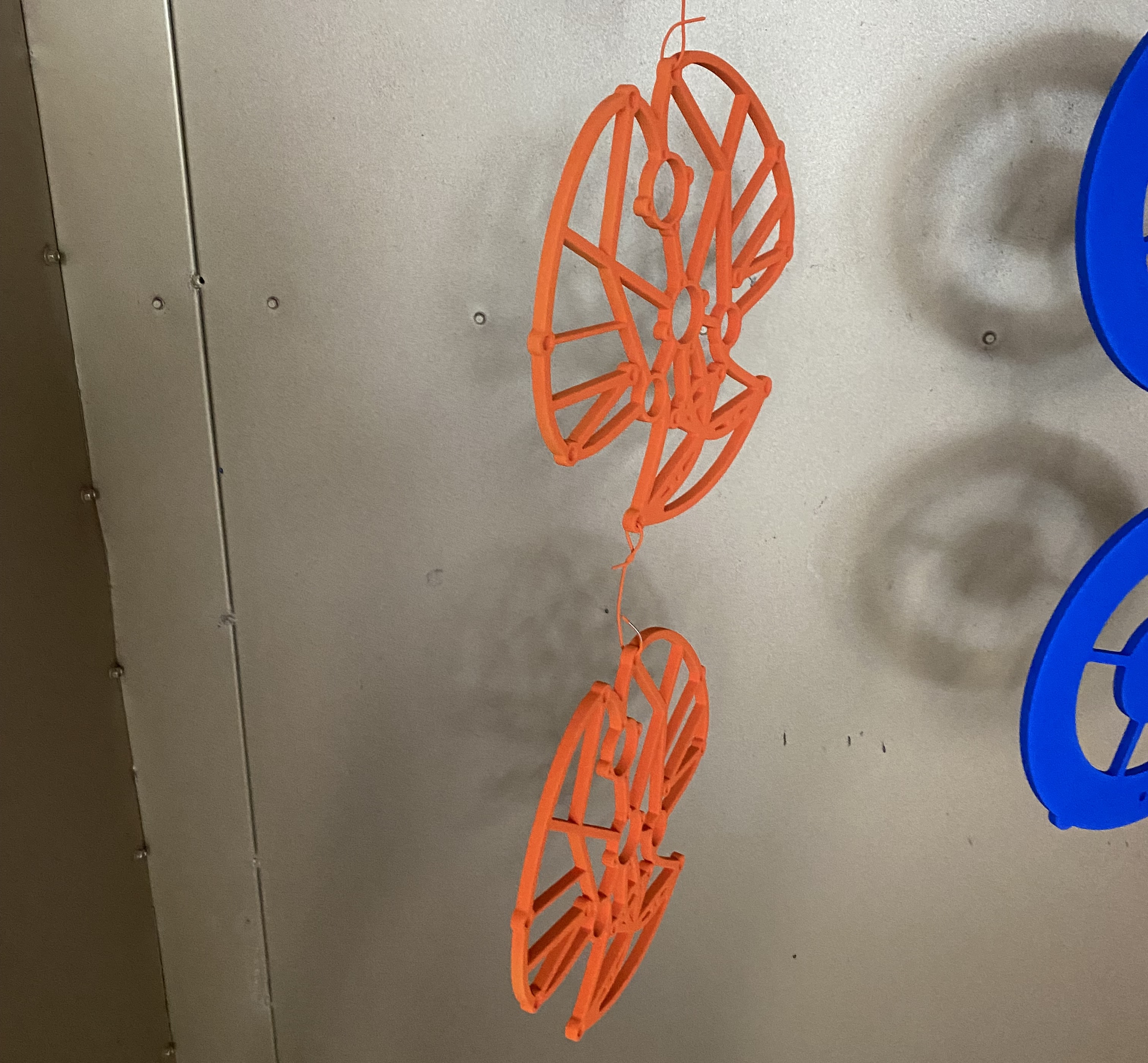
Go kart component hanging to dry after being powder coated.
- Materials: Wood, aluminum, nuts, bolts, rivets.
- Machining: Band saw, CNC waterjet, knee mill.
- Refinement: Belt sander, disk sander, soldering, riveting, nut and bolt assembly.
- Finishing Touches: Powder coat painting, soldering.
Trial Results
The final prototype was the quickest of all karts in the time trial test, where a series of obstacles had to be driven around precisely, followed by braking quickly to deliver a payload to a designated position before returning. The final prototype also achieved the greatest top speed in a straight-line trial, making it the highest performing of all concurrent and past karts in both speed and trial time. These results came from the initial design decision to maximize power relative to weight by cutting weight wherever possible, and from the tank-like steering, which allowed for quick rotation.
- Trial Time: 18.81 seconds.
- Top Speed: 36 kilometers per hour.
- Total Weight: ~70 kg including driver.
- System Reliability: Zero cases of subsystem failure.
Future Improvements
- Improve efficiency of drivetrain, requiring less frequent recharges.
- Change drivetrain for more diverse applications, beyond given trial. Tank treads worked in this case, but are generally more limited.
- Create more complex chassis that is even more weight efficient. A rectangle is good for simplicity, but not entirely optimal.
- Integrate on-board steering, not relying on RC, for more fine-tuned control over the vehicle, and to escape inherent occasional RC unreliability.
Conclusion
The kart recorded the fastest trial time and the highest top speed of the karts tested. Further development would focus on chassis mass and drivetrain efficiency.